Best American-Made Camping & Hiking Gear
Boots, socks, packs, water filters, and camp cookware made in the USA — gear built to handle actual wilderness conditions, not showroom floors.
Quick Answer
The best American-made camping gear includes Mystery Ranch packs from Bozeman, Montana, Granite Gear packs from Two Harbors, Minnesota, and GSI Outdoors cookware from Spokane, Washington.
Last updated: April 2026
Made in USA Sports & Outdoors: by the numbers
- 620 verified American-made sports & outdoors products from 140 U.S. brands in our catalog, each checked against factory locations and manufacturer statements.
- Top manufacturing states for these brands: California (10 brands), Colorado (9 brands), Minnesota (9 brands).
- U.S. manufacturing employed 12.6 million Americans as of May 2026 (U.S. Bureau of Labor Statistics), and 70% of consumers say buying American-made matters to them (DuraPlas survey, Feb 2025).
Catalog figures recompute at every site build. More data and sources on our American manufacturing statistics page.
Quick Comparison
| Product | Brand | Link |
|---|---|---|
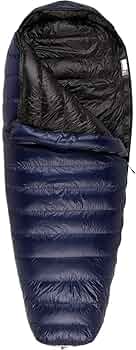
| Western Mountaineering TerraLite 25 Degree Down Sleeping Bag | Western Mountaineering | Shop Now |
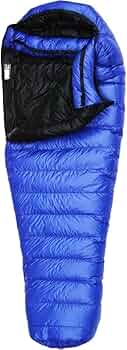
| Western Mountaineering UltraLite 20 Degree Sleeping Bag Royal Blue 6FT | Western Mountaineering | Shop Now |
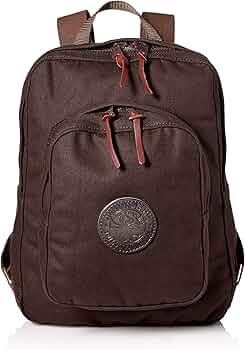
| Duluth Pack Medium Standard Daypack | Duluth Pack | Shop Now |
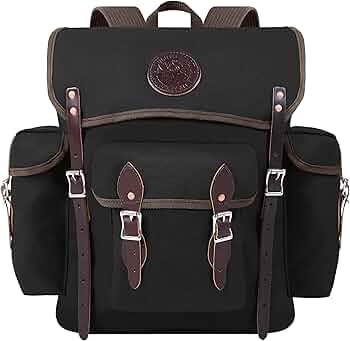
| Duluth Pack Wanderer Backpack | Duluth Pack | Shop Now |
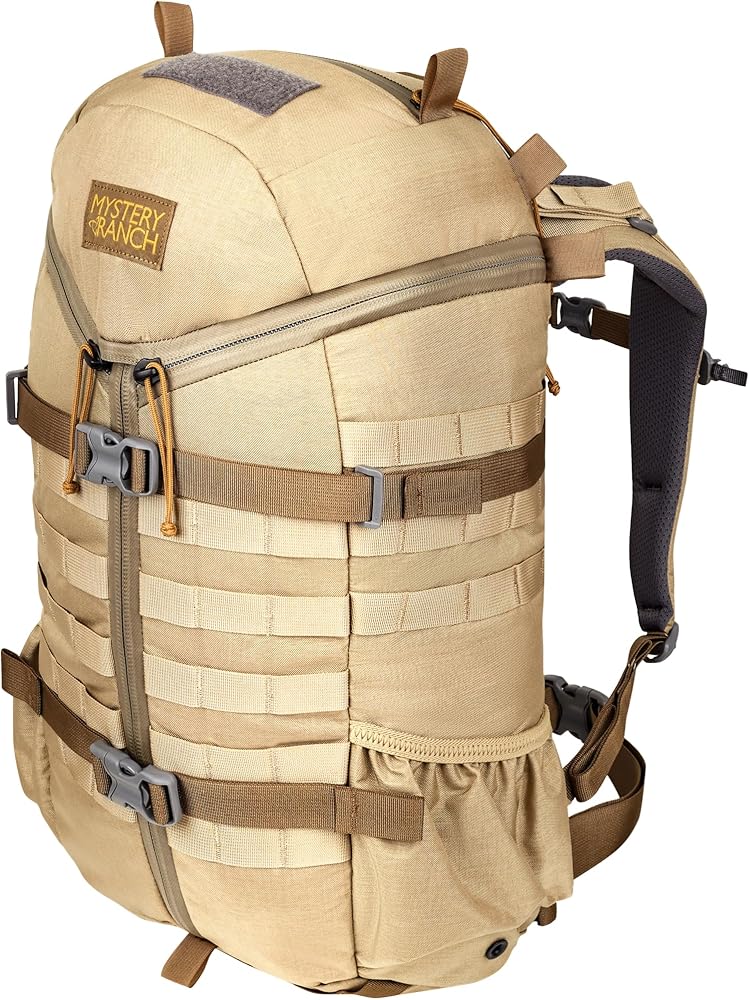
| Mystery Ranch 2 Day Assault Pack | Mystery Ranch | Shop Now |
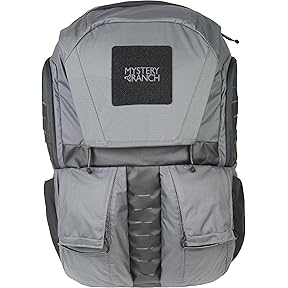
| Mystery Ranch Rip Ruck 32 Backpack Storm S/M | Mystery Ranch | Shop Now |
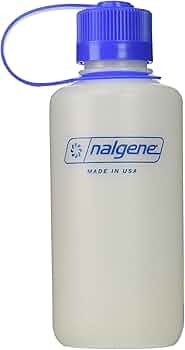
| Nalgene HDPE Narrow Mouth Water Bottle 16oz | Nalgene | Shop Now |
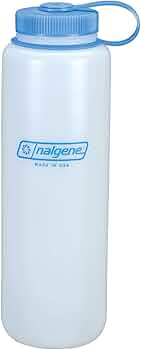
| Nalgene HDPE Wide Mouth Water Bottle, 48 oz, Clear | Nalgene | Shop Now |
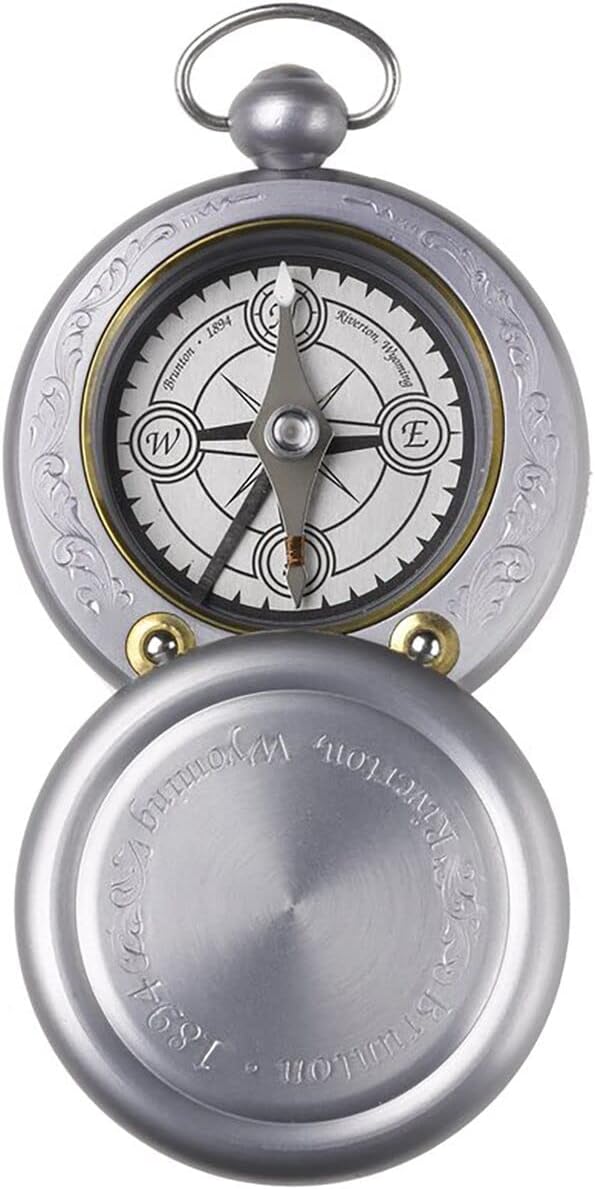
| Brunton 1894 Gentleman's Vintage Pocket Compass | Brunton | Shop Now |
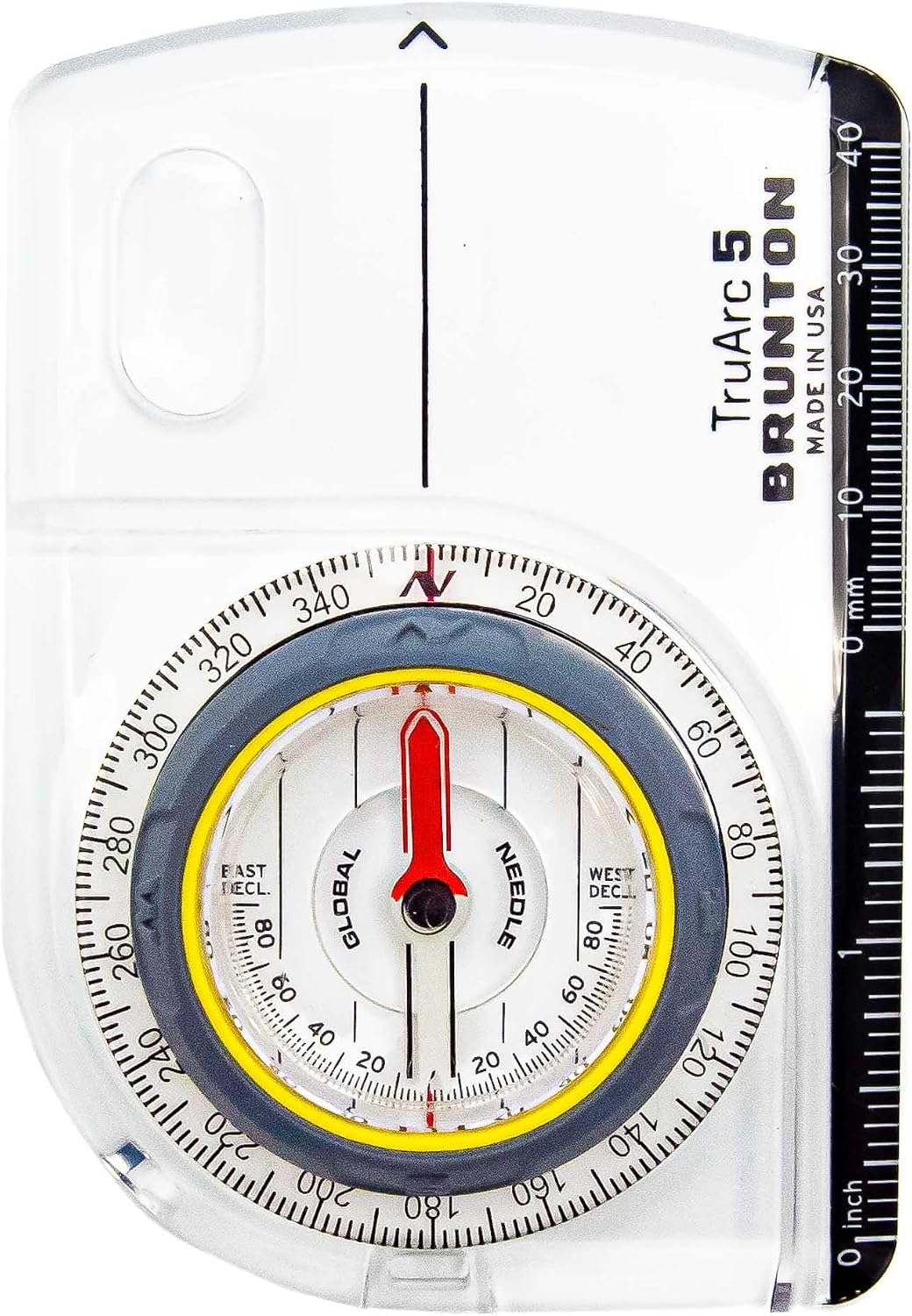
| Brunton TruArc 5 Baseplate Mapping Compass | Brunton | Shop Now |
Hiking Boots: Danner and Thorogood
Danner has made boots in Portland, Oregon since 1932. The Mountain Light and Quarry USA lines are the flagship Made in USA products — both use Goodyear welt construction with full-grain leather uppers and GORE-TEX lining. The Goodyear welt matters practically: it means the boots are resoleable, and a quality cobbler can restore them to service multiple times over a decade or more. Danner's stitch-down welt produces a lower profile than traditional Goodyear construction, making the boot more flexible underfoot without sacrificing the resoling access that makes long-term ownership economical. The Mountain Light's last is built for a narrower heel and wider forefoot — a fit that translates to less heel lift on steep descents and more toe comfort on long miles.
Thorogood boots are made in Merrill, Wisconsin by Weinbrenner Shoe Company, which has operated there since 1892. The American Heritage line is purpose-built for heavy work and trail use: Goodyear welt construction, American tannery leather, Vibram outsoles rated for EH safety in appropriate configurations. For buyers who need a boot that transitions from trail to work site, Thorogood's American Heritage series handles both. The 6-inch moc toe is the most popular configuration — a round toe box with more room for foot swelling over long days, a practical design choice rather than an aesthetic one.
For buyers choosing between Danner and Thorogood for trail hiking: Danner's Mountain Light is the more trail-optimized choice, with GORE-TEX waterproofing and a hiking-specific last. Thorogood is the better choice if the boot will also see work site duty. Both are resoleable, both are made in the Pacific Northwest or Wisconsin, and both carry a decade-scale ownership expectation.
Socks: Darn Tough Vermont and Farm to Feet
Darn Tough Vermont knits all of its socks at Cabot Hosiery Mills in Northfield, Vermont, where the company has operated since 1978. The socks use merino wool combined with nylon and Lycra for durability and stretch retention; the unconditional lifetime guarantee — if any hole develops at any time, send them back for a replacement — is genuine and processed routinely. For hiking specifically, the Hiker Boot and Trek Sock in full or medium cushion are the most practical choices. The merino wool provides temperature regulation across a wide temperature range: warm enough for early-morning fall hiking, cool enough to prevent overheating on exposed ridge walks. The full-cushion sole adds padding on rocky terrain without the bulk that makes heavy wool socks uncomfortable on longer days.
Farm to Feet is a smaller operation in Mount Airy, North Carolina with a fully domestic supply chain: American-farmed wool, yarn spun domestically, socks knit in North Carolina. This level of traceability is rare in the sock category — most brands that advertise American knitting source fiber internationally. Farm to Feet publishes the names of their fiber and yarn supply partners, making the claim verifiable rather than aspirational. The Boulder crew sock is the most practical hiking option: a medium-weight merino construction with targeted cushioning under the heel and ball of foot, appropriate for day hikes through moderate backpacking trips.
For buyers choosing between Darn Tough and Farm to Feet: Darn Tough's lifetime guarantee and wider distribution make them the default recommendation. Farm to Feet is the choice for buyers who specifically want American fiber in addition to American manufacturing — the fully domestic supply chain is the brand's distinguishing commitment.
Packs and Carry: Mystery Ranch, Duluth Pack, and Granite Gear
Mystery Ranch designs and sews packs in Bozeman, Montana, where founder Dana Gleason spent decades building expedition packs before launching the brand. The NICE frame system uses interchangeable hip belts and shoulder harnesses — you can swap harness components without tools to dial in the fit for different load weights or different wearers. The In and Out 22, a collapsible daypack, and the Terraframe 50 and 65 expedition packs are the most versatile choices from the Bozeman production lines. CORDURA fabric construction, bar-tacked stress points, and precision panel seams characterize the build quality. For buyers who use packs heavily — extended trips, technical terrain, or load weights over 35 pounds — the fit system and construction quality are worth the premium.
Duluth Pack has made canvas packs and bags in Duluth, Minnesota since 1882. Their construction is sewn (no bonding or lamination), uses solid brass hardware, and follows patterns that trace to the North Woods canoe trade. The original pack canoe and canvas portage packs are still in production. For car camping, canoe trips, and travel that doesn't require ultralight weight savings, Duluth Pack's waxed canvas and natural canvas products are more durable than most synthetic alternatives. The Market Tote and Roll Top waxed canvas packs are particularly strong for buyers who want everyday carry from a domestic manufacturer with a genuine historical lineage.
Granite Gear makes lightweight packs in Two Harbors, Minnesota. Their Blaze 60 backpacking pack is engineered for buyers who count ounces: a 60-liter pack at 2 pounds 14 ounces loaded, using a framesheet that can be removed for an ultralight carry when the trip doesn't require full structural support. The Air Current stuff sack compression system, also made in Two Harbors, is the most practical domestic option for compressing sleeping bags and insulation layers. For buyers building an ultralight backpacking system, Granite Gear's weight-to-capacity ratio is competitive with any domestic pack manufacturer.
Water, Navigation and Camp Gear: Sawyer, Nalgene, and Brunton
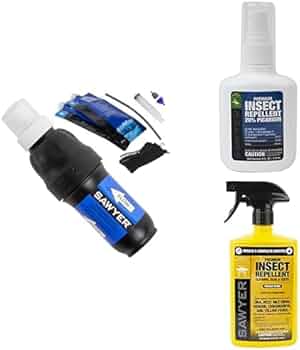
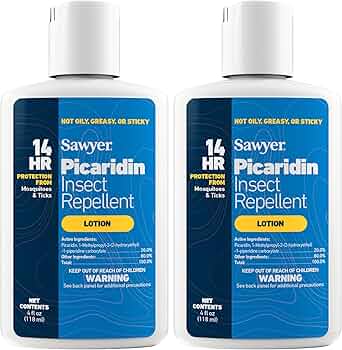
Sawyer Products makes water filters in Safety Harbor, Florida. The Sawyer Squeeze is a hollow-fiber filtration system rated at 0.1-micron absolute filtration — it removes bacteria, protozoa, Giardia, and Cryptosporidium, the primary waterborne pathogens in North American backcountry water. The filter attaches directly to a Sawyer squeeze pouch, a standard plastic water bottle, or a standard gravity filter bag. The 100,000-gallon rated capacity (with proper backflushing) makes it a life-of-the-hiker piece of equipment rather than a consumable. For DEET-free insect protection, Sawyer's permethrin clothing treatment is a separate product worth including in any backcountry kit — permethrin treated on fabric is significantly more effective than topical application alone for tick prevention.
Nalgene bottles are made in Rochester, New York from Tritan copolyester, a BPA-free material that replaced polycarbonate in 2008. The standard 32-ounce wide-mouth bottle has been the default backcountry water bottle for decades because the form factor solves the practical problems: the wide mouth accepts ice cubes and allows easy cleaning, the graduated markings allow measuring hydration intake, and the leakproof cap holds under pack compression. The 16-ounce Nalgene is a useful secondary bottle for mixed hot and cold drink use; it fits in most jacket chest pockets.
GSI Outdoors makes camp cookware in Spokane, Washington. The Pinnacle Dualist cooking system, Halulite pots, and insulated camp mugs are designed for compactness without compromising usable cooking volume. The hard-anodized aluminum in the Halulite line provides better heat distribution than thin stainless and resists the scratching that degrades non-stick coatings. For buyers cooking for two or three people, GSI's Pinnacle Camper cook set includes a 1.8-liter pot, fry pan, and nested mugs in a stacked system that packs smaller than its component count suggests. For navigation, Brunton builds its TruArc baseplate compasses and professional pocket transits at its factory in Riverton, Wyoming, where the company has made compasses since 1972; the TruArc 3 is a light, simple trail compass and the TruArc 15 and 20 add a sighting mirror and inclinometer for off-trail work.
Lighting and Protection: Princeton Tec Headlamps and Pelican Cases
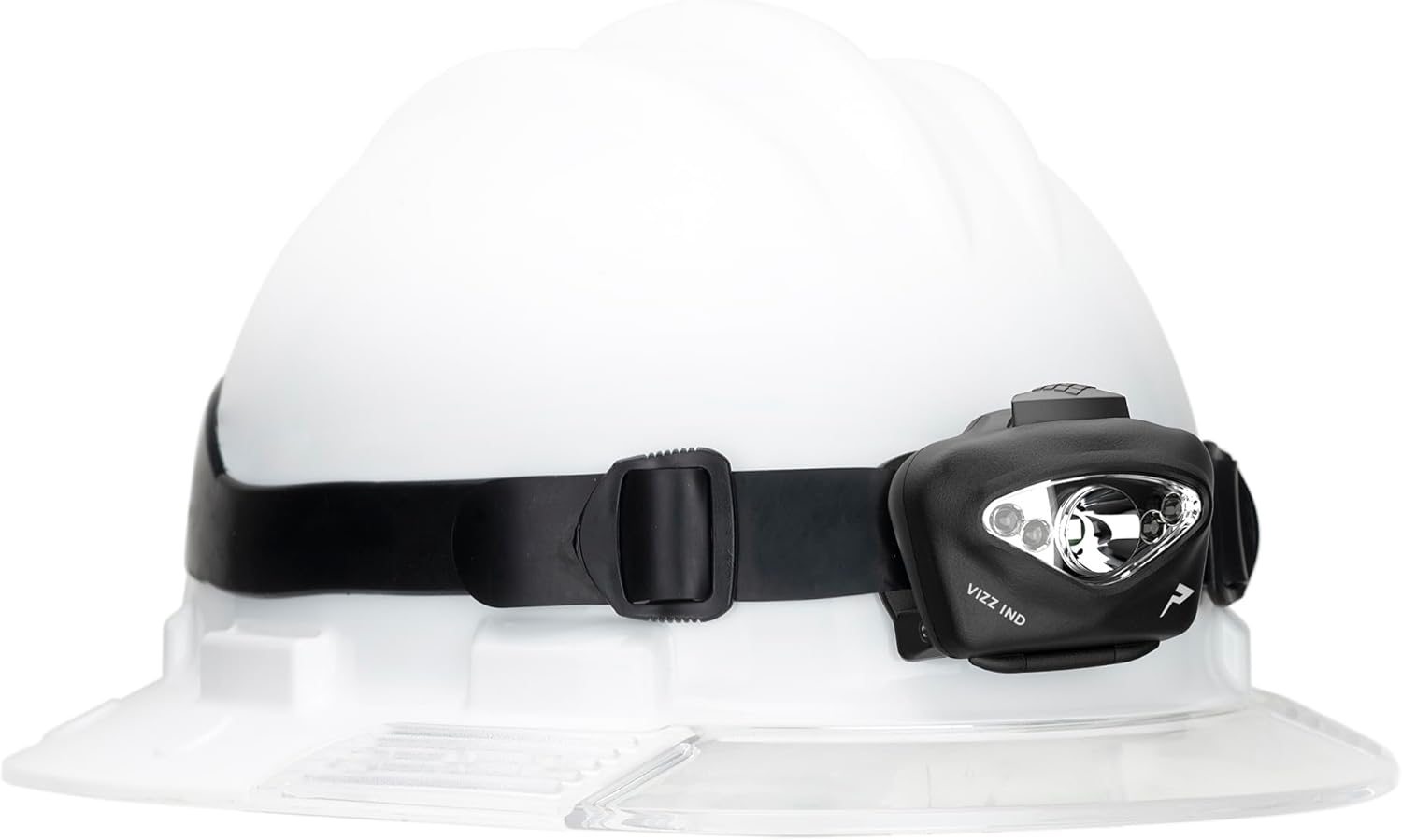
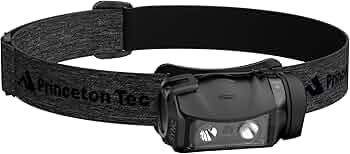
Princeton Tec manufactures headlamps in Trenton, New Jersey with a focus on reliability in wet conditions and extended cold exposure. The company's dive light heritage — they began making underwater illumination in 1975 — informs their headlamp design philosophy: overfill the case with potting compound to prevent water intrusion, use O-ring seals rated for sustained submersion, and test every unit before shipping. The Apex rechargeable headlamp produces 275 lumens with multiple brightness settings, a red night-vision mode that preserves dark adaptation for nighttime navigation, and a tilt-adjustable head that directs the beam downward while your torso faces forward — a practical feature that eliminates the need to crane your neck. For multi-day camping trips, the USB rechargeable model means you're not dependent on battery availability at remote supply points.
The Princeton Tec Remix model offers a lighter option for day hikes and overnight trips: 100 lumens across three modes, rechargeable via standard USB, and waterproof to 10 meters. Both models use standard AA batteries as backup if you can't access USB charging — a practical advantage over headlamps locked into proprietary battery formats. For buyers choosing between multiple brightness modes and maximum simplicity: the Apex is worth the premium if you frequently camp in unfamiliar terrain where variable lighting needs matter. The Remix is the practical choice for established campsites where the lighting demands are more predictable.
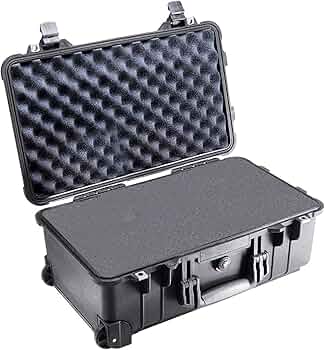
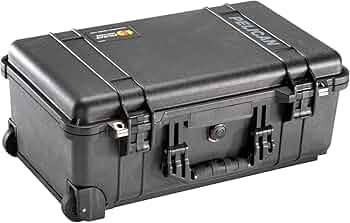
Pelican hard cases are manufactured in Torrance, California and provide absolute protection for expensive gear in transit to and from trailheads. A 1450 case protects camera equipment, binoculars, portable solar panels, or satellite communication devices from impact damage and moisture that would render these items inoperable in the field. The pressure-relief valve equalizes cabin pressure during flights without admitting moisture, making Pelican cases ideal for backpacking expeditions that require air travel. The pick-and-pluck foam interior molds exactly to your equipment's shape, and the waterproof seal rated to 3.3 feet maintains protection during river crossings or accidental submersion. For a serious backcountry enthusiast with optics or electronics investments, a Pelican case is a one-time purchase that protects your equipment across decades of trips.
Browse All Sports & Outdoors Products
See all 620 verified American-made sports & outdoors products in our catalog.
Frequently Asked Questions
What American-made hiking boots are worth the investment?
Danner's Mountain Light (Portland, Oregon) and Thorogood's American Heritage series (Merrill, Wisconsin) are both Goodyear-welted and resoleable, which makes them genuinely long-term investments. A pair of Danner Mountain Light boots maintained and resoled over a decade costs significantly less per year than replacing non-resoleable boots every two to three years. Danner is the more trail-specific choice; Thorogood works better for mixed trail and work-site use.
Are Darn Tough socks worth the price?
Yes, particularly given the lifetime guarantee. A pair of Darn Tough hiking socks costs $25-30 and is replaced free any time they develop a hole. Over five or ten years, the net cost per pair approaches zero. The merino wool construction also performs better across temperature ranges than synthetic hiking socks — warm enough for fall hiking, cool enough for summer approaches. The socks are knit in Northfield, Vermont at Cabot Hosiery Mills.
How long does a Sawyer Squeeze water filter last?
Sawyer rates their hollow-fiber filters for 100,000 gallons of use, making them effectively lifetime equipment for most hikers. Actual lifespan depends on water turbidity and backflushing frequency — filtering silty or cloudy water clogs fibers faster and requires more frequent backflushing with clean water. With normal backcountry use and regular backflushing, a Sawyer Squeeze lasts years of regular use. The filter is made in Safety Harbor, Florida.
What makes Mystery Ranch packs worth the premium?
Mystery Ranch's NICE frame system allows interchangeable hip belts and shoulder harnesses without tools, so the pack can be fitted precisely to the carrier's torso length and hip width. This matters most for loads over 30 pounds, where a poorly fitted pack causes fatigue disproportionate to the load weight. The Bozeman, Montana construction quality — CORDURA fabric, bar-tacked attachment points, precision panel seams — also outlasts most imported packs in heavy use. For casual day hikes, the premium is harder to justify; for extended trips and heavy loads, it's significant.
Is a Princeton Tec headlamp necessary for camping?
For established campsites with minimal nighttime navigation, a simple flashlight suffices. For backpacking trips, multi-night excursions, or camp activities after dark, a hands-free headlamp is genuinely useful — you can set up camp, prepare food, and navigate to a latrine with both hands available. Princeton Tec's tilt-adjustable head (Apex model) is practical for cooking in camp without tilting your entire upper body to illuminate your work area. The red night-vision mode preserves dark adaptation and is the appropriate setting for nighttime navigation between camp and forest.
What size Pelican case is best for camping trips?
The 1450 case is the most practical camping size: large enough to protect camera lenses, binoculars, or portable electronics (solar panels, satellite communicators, medical supplies), with a form factor that fits in a vehicle side panel or pack interior. It's waterproof to 3.3 feet and airtight, so it protects against moisture damage in wet camps or river crossings. For backpacking trips where you're flying to a remote location, the Pelican case protects your expensive gear during checked baggage handling and provides reliable equipment protection at the trailhead.
Can I use American-made camping gear for actual backpacking trips?
Yes. Mystery Ranch backpacks (Bozeman, Montana), Danner hiking boots (Portland, Oregon), Darn Tough socks (Northfield, Vermont), GSI Outdoors camp cookware (Spokane, Washington), Princeton Tec headlamps (Trenton, New Jersey), and Pelican protective cases (Torrance, California) are all manufactured to professional and military specifications. These brands are used by outdoor professionals, military personnel, and serious backcountry enthusiasts. The American-made camping gear listed in this guide performs identically to any imported equivalent, with the added advantage of domestic sourcing, domestic customer service, and domestic parts availability if repairs are needed.
Which American-made water filter is best for backpacking?
Sawyer Squeeze (made in Florida) is the most popular backpacking choice because it's lightweight (under 2 ounces), integrates with standard bottle systems, and filters to 0.1 microns (removes bacteria and protozoa). The hollow-fiber cartridge is cleanable, extending the lifespan. For trips where water sources are known and clean, a Nalgene bottle with a Sawyer filter is all you need. For extended trips or uncertain water quality, pairing a Sawyer with a secondary chemical treatment (tablets) adds redundancy.
What makes Nalgene bottles special for camping?
Nalgene bottles are made in Rochester, New York from Tritan copolyester (BPA-free). The wide mouth allows filling from streams, cleaning, and adding ice without funnels. The sturdy plastic withstands freezing without cracking — a significant advantage over metal bottles in cold conditions. A 1-liter bottle (basic hiking need) is durable enough to last decades of backcountry use, which amortizes the initial cost. The bottles are dishwasher safe and don't leach chemicals or take on taste from stored water.
Is GSI camp cookware lightweight enough for backpacking?
Yes. GSI's hard-anodized aluminum pots and the ultralight stainless steel Pinnacle camp cup are both weight-conscious. The 1.1L Halulite pot weighs just over 2 ounces and boils water efficiently. For ultralight backpacking (single meals prepared with minimal cooking), a 1L camp cup and a lightweight windscreen are sufficient. For longer trips or group cooking, stepping up to a 2-3L pot allows preparing hot meals and rehydrated food. GSI designs with backcountry weight in mind.
Should I buy a tent or sleep system first?
Sleep system first. A quality sleeping bag (rated for the coldest temperature you'll encounter) and sleeping pad provide more direct benefit to sleep quality than any tent — a mediocre tent with excellent sleep gear beats a premium tent with inadequate insulation. Once you have a sleeping bag and pad, a simple 2-3 season tent appropriate to your climate becomes the next investment. American brands: Western Mountaineering (sleeping bags), Thermarest (sleeping pads), and others exist but tent manufacturing is more globally distributed.
Are Princeton Tec headlamps waterproof?
Most Princeton Tec models are waterproof rated to 10 meters (sufficient for immersion and wet conditions but not diving). The Apex, Remix, and other mainstream models maintain full functionality when wet. The red night-vision mode uses a separate red LED and is the appropriate setting for nighttime camp and trail navigation — white light destroys night adaptation and interferes with sleep schedules.
What's the difference between a day pack and a backpacking pack?
Day packs (20-30 liters) are designed for single-day trips with minimal gear (water, snacks, layers). Backpacking packs (40-60+ liters) have load-bearing hips belts to transfer weight to your hips rather than shoulders, making them suitable for multi-day trips with tent, sleeping bag, and food. For a first camping trip, a day pack with a comfort load under 10 pounds allows testing the activity without the complexity of full backpacking gear. Mystery Ranch and Granite Gear both make excellent day and overnight packs.
Do you need special clothing for camping, or regular clothes work?
Regular cotton clothing dries slowly when wet and loses all insulating value. Backpacking clothing should be moisture-wicking (wool or synthetics) to move sweat away from the skin. Darn Tough merino socks and wool layers from Pendleton or American Giant provide temperature regulation and quick drying that cotton doesn't offer. For a first camping trip, wool layers you already own work; as you expand into regular backpacking, dedicated gear becomes worthwhile.
What's the most important camping/hiking skill I should know before buying gear?
Navigation and weather awareness matter more than gear. Knowing how to read a map, understand weather patterns, and assess water sources prevents most serious problems. Practice navigation and trip planning before investing heavily in gear. Once you understand what conditions you'll encounter and what activities you'll do, you can choose gear specifically matched to your needs rather than generic all-purpose equipment.